
Polythene mailers
Polythene mailers come in a wide variety of styles, shapes and sizes . They are designed to meet the many different types of products that need mailed. Other than mailing they will protect your product from weather or punctures. Polythene mailing bags are the popular choice in today's business world as well as a popular mailing bag choice for personal mailing needs.
There are many choices of polythene mailers available on the market today that you should be able to find the right product to meet your particular needs. Plastic mail order bags can be clear or coloured and come in a wide range of sizes from smaller than an envelope to quite large. They can also be high or low density polythene, flat, ziplock or zipper mail bags, gusseted, reinforced and cushioned. Some are also made with laminated paper.
Printed mailing bags - stand out from the crowd!
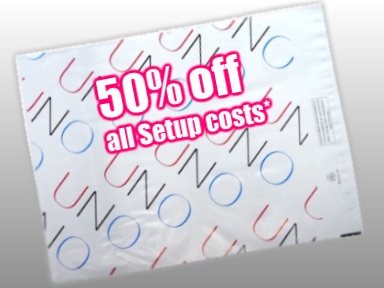
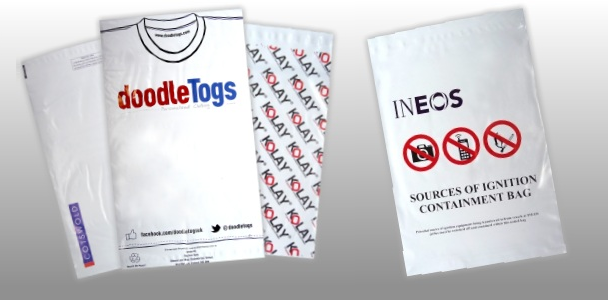
There are hundreds of mailing bags to choose from, but one way to guarantee you'll like the mailing you get is to design your own! We offer a printed mailing bag service, allowing you to personalise all of your mailers with a company logo, branding or a message to your customers - whatever you want to include on your mailers we can accommodate it.
What better way to stand out from the crowd of mail on the door mat, cubby hole or mailbox every morning than with a personalised, company branded, mailing bag. You can even design seasonal mailing bags to suit the time of year - e.g. Christmas - to stand out from the crowd and give your customers something to remember to you by.
Printed packaging creates customer loyalty
 Not only do printed mailing bags and other printed packaging help you stand out from the crowd, but they have been proved to create such a positive impression with customers that they actually increase customer loyalty.
An e-commerce packaging survey by Dotcom Distribution, a US-based strategic logistics partner, found that 52% of consumers were likely to make repeat purchases from online retailers that delivered their products in premium packaging, such as printed mailing bags complete with company branding.
Dotcom Distribution president Maria Haggerty said: "Customers look for the 'wow' factor when shopping online, as they miss out on the in-store experience. Premium packaging for online purchases delivers a brand's in-store experience to an e-commerce customer."
Source: 'Brown Boxes Don't Deliver for Brands' - Dotcom Distribution eCommerce Packaging Survey, 2013
Trending results for polythene mailers
Wholesale polythene suppliers Mailing Bags
Wholesale polythene suppliers mailing bags have to be judged as working packaging, not only cost-effective plastic sleeves. Their proper value is decided by how the film behaves amid packing, stacking and transport, because a bag that sees fine on a spec sheet can still split at the seam or scuff at the corners when a consignment is rushed through a busy dispatch area. Gauge, seal quality and puncture resistance matter because mail bags often transport awkward shapes with hard edges, and those contents create stress points from the inside. A slightly lighter bag can improve pallet density and reduce storage space, nevertheless only if the material still grasps together below handling damage. That balance is what separates sensible buying from false economy.
polythene suppliers mailers have to dash cleanly on packing equipment as much as they need to meet a gauge target. A film can see proper on paper yet still feed badly, pull unevenly or bunch at the seal area, and that fast turns into slow packing and more rejects on the line. The blend, thickness and slip level all affect web control, so the mailer requirements enough body to stay stable without fighting the machine. When film tension is balanced properly, filling stays proper and the pack comes off in better shape.
Details about 100Pcs Coloured Mailers Shipping Envelopes Self Sealing Plastic Mailing Bags
Coloured mailers need proper film performance, not only a bright stop, because the packing bench is where weak material shows up first. A proper gauge assists the bag resist folding, rubbing and the sharp edges of cartons, while thin spots can stretch, split or tear at the seam before the package is finished. That creates stoppages, additional handling and more rejects in the waste bin. A mailer that retains its shape lets operatours transport faster and build parcels with less fuss, which is worth above a clever colour alone.
Heavy duty mailers suit small products that need proper protection without the fuss of building a carton and adding filler. A well-manufactured paper-based mailer saves time on the packing line because it arrives flat, goes together fast, and retains the contents snug without loose space rattling about in transit. That makes life easier in dispatch, where speed and consistency matter only as much as material selection. For light nevertheless awkward items up to a couple of inches thick, the proper mailer can cut handling damage and improve pack rate at the same time. The optimal result is a cleaner, faster pack-out with less wasted material to deal with later.
Economy mailers only save money when the film is matched properly to the job, because a slim bag that sees efficient can split as soon as it meets sharp corners, rough conveyour transfers or a crowded cage. The better polythene suppliers blends give enough stretch and tear resistance to cope with normal fulfilment knocks without needing thicker secondary packing, which assists retain select-face space and dispatch time below control. The proper test is not how tidy the mailer sees at the beginning, nevertheless how it behaves amid loading, label application and last sortation. A mailer that stays intact through the dash retains labour tied to dispatch, not rework.
Printed Mailing Bags, Custom Printed Mailing Bags, Order Now!
Printed mailing bags work optimal when the material behaves properly on the packing line, not only when the print sees sharp on the sample sheet. A superb polythene suppliers gauge gives the bag body against knocks, while the seal zone has to grasp together when boxes, books, or strange-shaped items are shoved inside at speed. If the film is also thin or the slip is gross, bags can cling in the stack, feed badly, and slow the bench down. That sort of problem soon turns into trapped air, split seams, and messy rework. A bag that runs cleanly through dispatch saves time where it matters.
Buy Online Printed Plastic Courier Bags | Tamper Proof …
Good courier bags keep safe small consignments properly when the film, seal and stop are specified for the job rather than chosen on thickness alone. A co-extruded polythene suppliers structure with tight gauge control gives steadier performance than a flimsy mailing sack, because tear resistance and seal behaviour matter above a bit of additional material. For marketing packs, samples and cosmetic items, the bag also has to dash cleanly at the packing bench, with a low-tack inner face that does not snag and an opaque outer layer that conceals contents from casual view. That retains secondary packing brisk and reduces handling damage before the package even leaves despatch.
Plastic envelopes are a practical method to keep safe paperwork that requirements to transport through a warehouse, office or dispatch area without getting bent, damp or labeled. The material selection matters because thin film can split at a corner, while heavier gauge plastic gives better stiffness and retains inserts flatter in transit. A secure closure also assists, particularly when documents are handled repeatedly amid picking, filing or despatch. Velcro-style fastening is useful for fast access, though it must grasp properly if the envelope is being reused. When the envelope matches the job, paperwork stays tidier and handling losses are reduced.
Mailers are often judged on price alone, nevertheless the better test is how well they keep safe printed items without wasting space or material. A superb literature mailer requirements a board grade that stays rigid in transit, folds cleanly on the packing line, and resists corner crush when stacked with other consignments. Poorly manufactured mailers can open at the flap, scuff the contents, or slow dispatch because The packing team has to retain checking seals and fit. A sensible spec balances board strength, pack speed, and courier handling, which retains damage down and avoids sending air through the warehouse.
Grey Mailing Bags Strong Poly Postal Postage Post Mail Self Seal All Sizes Cheap Grey Mailing - £151.99
Mailing bags only earn their place when the film is matched properly to the job, because a thin, weak bag wastes time and a heavy one wastes transport capacity. A decent gauge with balanced puncture resistance will cope with sharp box corners, folded collars and the strange rough edge without pushing the stock into fat, awkward reels that take up also much room in the store. On the shop floor that contrast shows up fast: flimsy bags lead to doubles, additional handlings and more stops on the packing line, while an above-specified bag quietly adds dead weight to all package movement. The optimal selection is the one that protects the contents without making the operation clumsy.
Printed mailers - get a quote in 60 seconds!
Not only are we able to provide the ideal mailing for you or company through our personalisation service, but we give you an instant quote on how much it will cost!
It takes less than 60 seconds to complete our online quote form and we'll email you a quote immediately. We don't hang around and we don't want you to have to either!
Just tell us a few details about the mailing bags you need - quantity, size, polythene thickness, colour etc. - and whether you want it printed on one or both sides. We'll instantly calculate what your order will cost an give you the price there and then - in total and per bag!
Life's too short to wait around, so order your printed mailing bags with us and you won't have to - you'll have a quote in 60 seconds!
Types of polythene mailers:
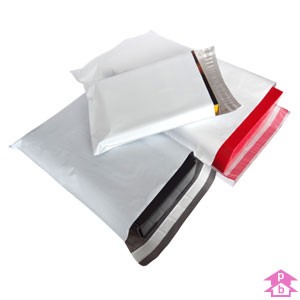
Polythene mailing bags come in all shapes and sizes. They have some common features - such as their easy-to-use self-seal strip - but cater for a huge variety of postage needs with a wide range of products. Here are a few of the most popular:
Clear polythene mailers
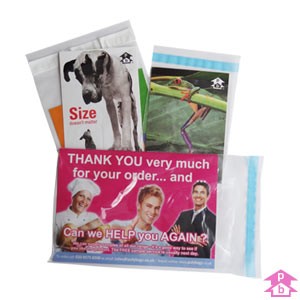
Clear polythene mailers are lightweight and so help to reduce postage costs. They are also waterproof and tear-resistant, which makes them the ideal mailer for posting catalogues and brochures.
Blue opaque mailers
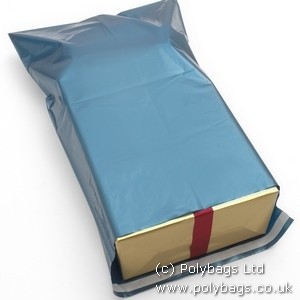
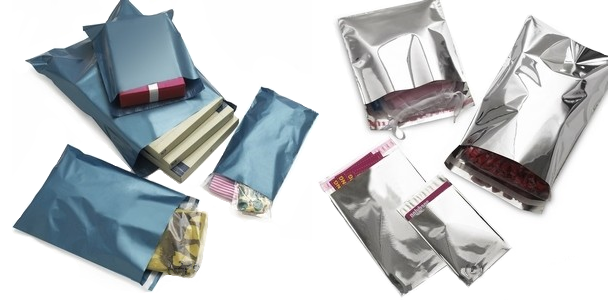
Blue opaque mailing bags are also waterproof and strong, as well as being 100% recyclable. They offer more security than a clear mailing envelope, whilst their professional appearance makes them popular with mail order or online delivery companies.
High security mailers
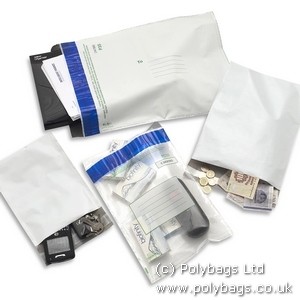
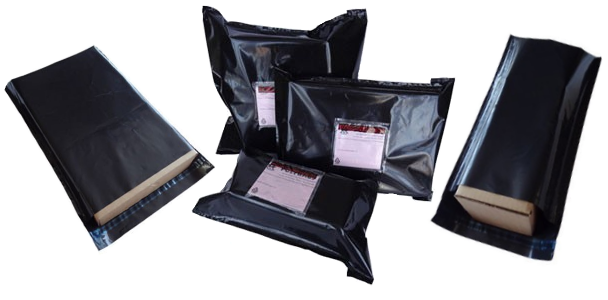
Tamper-evident sealing strips, thick black bags and ‘VOID’ labels to place across seals all feature in a range of high security mailing bags, which provide extra security and confidentiality for your mail.
Heavy duty mailers
Heavy duty mailing bags are made from a extra tough polythene - a strong co-extruded material that means you can post with confidence that your mail can withstand some rough handling in transit.
Superlight bubble mailers
If you need to post any valuable or delicate items, superlight bubble mailing bags can provide the all-important protection that they require. Lined with bubble wrap, these handy mailers are waterproof, strong and light.
Metallic mailers
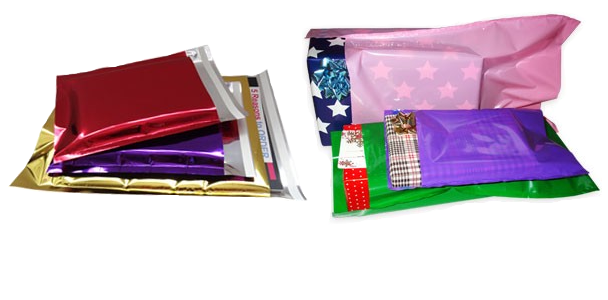
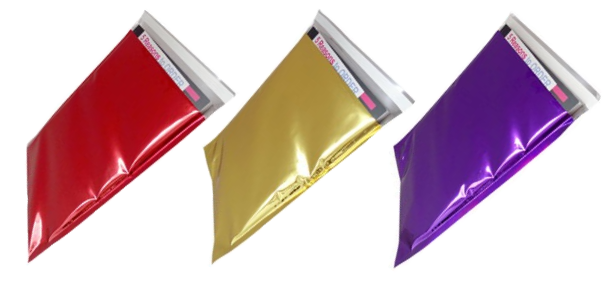
Give your mail some extra va-va-voom with this range of premium quality metallic mailing bags. Available in a selection of glossy metallic colours, these snazzy envelopes are guaranteed to make an impact.
Coloured mailers
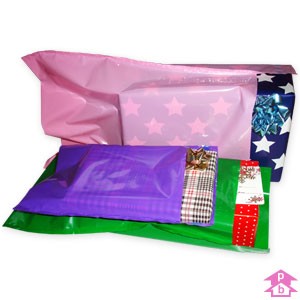
Another great way to get your mail noticed is to use a coloured mailing bag. Featuring colours such as baby pink, eco green, baby purple and glossy blue, this range of vivid coloured mailers will brighten up any delivery.
Biodegradable mailers
Look out for the environment while you send your mail with this range of biodegradable mailers. These strong mailing bags do the same great job as regular mailers, but they also biodegrade as compost once disposed of.
Mailing bags with handles
Mailing bags with a difference - with a seal at one end and a handle at the other, these bags are designed for easy handling. They are also multi-use bags, as an integral double seal allows for easy returns, making them popular with online retailers.
Polyethylene
Polyethylene or polythene (IUPAC name polyethene) is a thermoplastic commodity heavily used in consumer products. Over 60 million tons of the material are produced worldwide every year.
Classification
- Ultra high molecular weight polyethylene (UHMWPE)
- Ultra low molecular weight polyethylene (ULMWPE - PE-WAX)
- High molecular weight polyethylene (HMWPE)
- High density polyethylene (HDPE)
- High density cross-linked polyethylene (HDXLPE)
- Cross-linked polyethylene (PEX)
- Medium density polyethylene (MDPE)
- Low density polyethylene (LDPE)
- Linear low density polyethylene (LLDPE)
- Very low density polyethylene (VLDPE)
If you are interested in mailing you could always visit the mailing and courier bags section of packagingknowledge.com.
Get 20% off secure black mailsacks this Christmas!
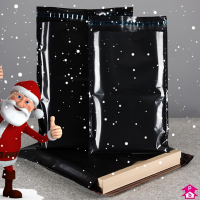 There's a fab festive offer from those fantastic folk at Polybags.co.uk this Christmas. Our parent website are giving 20% off all orders of secure black mailing sacks over £75.
All you have to do is apply voucher XMASMAIL16 and order your mailing sacks - the sleek black high security bags that Santa trusts for even his most confidential deliveries - and the discount will be automatically applied to your basket once your order reaches £75.
There's strictly one voucher per customer and it's a limited time offer, so don't delay!